Electronics Internship in Indore: Why Basics Training Helps
In this article (8 sections)
Many students ask us the same question: should I do an internship first, or learn the basics first? We have watched students take both paths, and our honest answer is that the best results come when you do both, in the right order.
What an internship gives you
Students who go to a company or an office get to see how real work happens. They watch engineers at work, they are supervised on live tasks, and they see how a real project is planned, built, tested and delivered. That view of a real project and a real working environment is valuable, and these students usually come back with a good experience. We encourage every student to do at least one internship.
The problem: internships assume you already know the basics
A company cannot stop its work to explain what a resistor is, how to read a circuit diagram, or why a sensor gives wrong readings. The supervisor gives you a task and expects you to follow. If you are starting from zero, you spend most of the internship trying to catch up, and you end up watching more than you actually do.
An internship shows you how real work is done. Training makes sure you can follow it and take part.
Who should start with Robozz Lab
If you want to learn electronics from the very beginning, or you have only just started learning, you can join Robozz Lab. You do not need any earlier knowledge. School students (Class 9 onwards), diploma and ITI students, and engineering students are all welcome. It also suits students who did an internship but felt lost because they did not know the basics.
What you learn with us, step by step
We teach hands-on and with one-to-one attention. You do not only watch a trainer. You build, you make mistakes, and you fix them with the trainer next to you. Here is what we cover, starting from zero:
- Basic electronics and circuits: voltage, current, resistance and how to read a circuit diagram
- Components: resistors, capacitors, LEDs, transistors, sensors, relays and motors, and how to identify, test and use them
- Microcontrollers: Arduino and ESP32, and how they sense, decide and act
- Programming: writing and reading microcontroller code, and fixing bugs
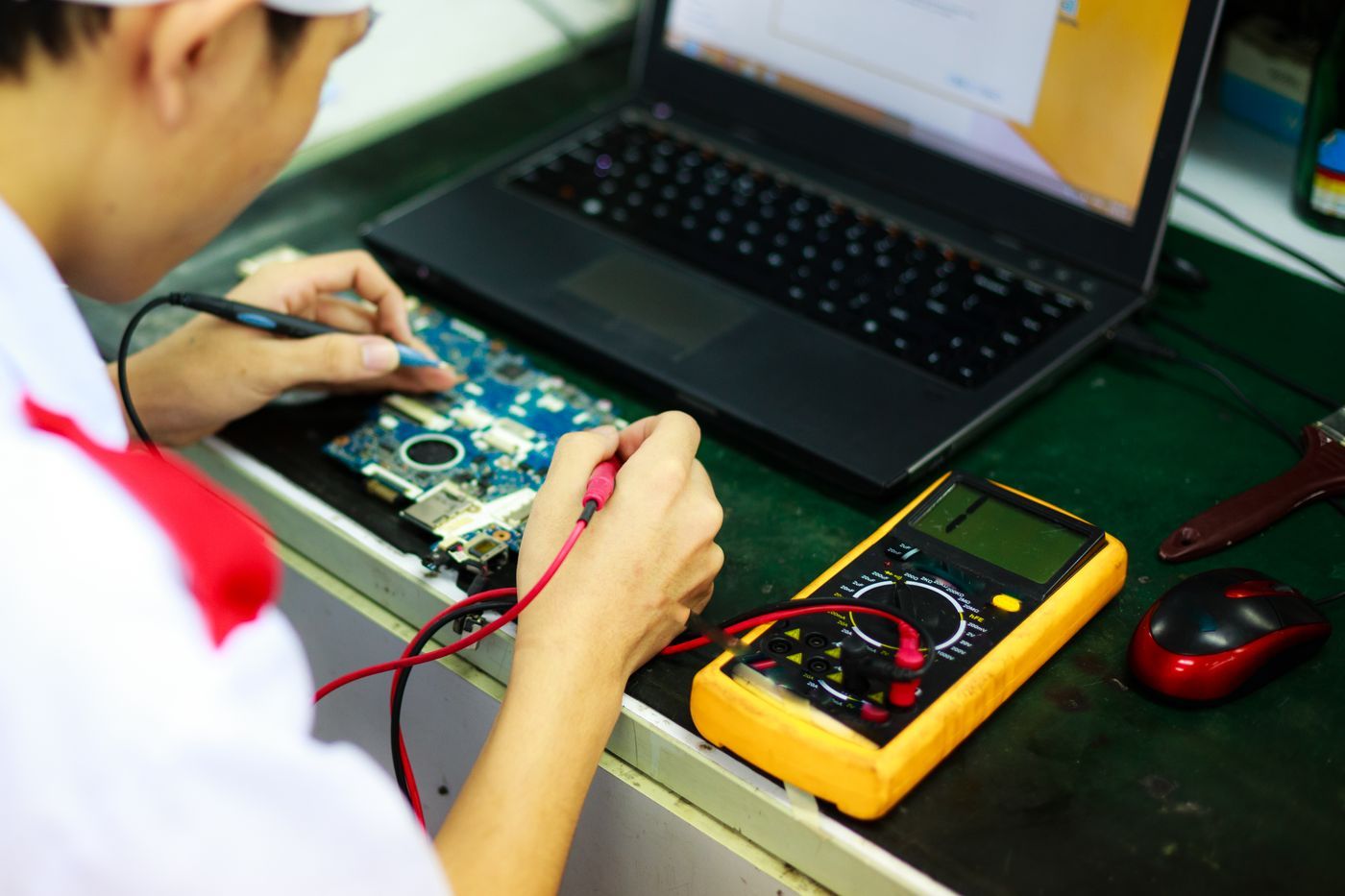
- Testing and debugging: using a multimeter and finding out why a circuit does not work
- Tools: breadboard, soldering iron and the other basic tools of an electronics lab
- Projects: small projects you can explain, and IoT projects with ESP32 (Wi-Fi, sensors and control from your phone)
How this helps you during your internship
- You understand the words and diagrams your supervisor uses
- You can start helping with small tasks instead of only watching
- You can test a circuit and find the problem yourself instead of waiting for help
- You have your own projects to show your supervisor and to talk about in interviews
- You ask better questions, so supervisors trust you with more real work
A simple path we suggest
- Step 1Learn the basics with hands-on practice
- Step 2Build three or four small projects, including one IoT project with ESP32
- Step 3Do an internship and see how a real team works
- Step 4Come back with your questions and build a bigger project
Both steps matter. Training gives you the foundation, and the internship shows you the real world. Together they make you much more confident for your first job.
Frequently asked questions
Do I need to know electronics before joining? No. We start with basic electronics and build up to microcontrollers and IoT.
Is this only for engineering students? No. School students from Class 9, diploma and ITI students, and engineering students can all learn here.
Does Robozz Lab take interns? Yes. You can send an internship application from our Learn and Train page.
Where is Robozz Lab? We are on Bhawarkua Main Road in Indore, Madhya Pradesh. You can visit the lab or message us on WhatsApp.
Start learning electronics in Indore
If you want to build a strong base before your internship, or you want help with your first projects, get in touch. Tell us your level and we will suggest where to start.
Keep reading
Have a question? Message us on WhatsApp.
Talk to the Robozz Lab team directly about projects, school labs, training or internships.